The Likeness, by Tana French

“Some nights, if I’m sleeping on my own, I still dream about Whitethorn House.” 

The first line of Tana French’s The Likeness tells you much of what you need to know about the novel: The house is key to what happens, as are ideals of home, family, and belonging. But it all revolves around protecting the house while its spell controls and defines the lives of those who live under its graceful roof.

Central to life inside Whitethorn is Daniel, who inherited the house from his bachelor uncle, and the friends he has chosen in graduate school: Abby, Rafe, Justin, and Lexie. He’s carefully curated his friendships to build his own family, with one unbreakable rule: No pasts.

When Lexie gets murdered, her doppelganger, Detective Cassie Maddox, takes her place in the house to try to solve the crime. Adding to the mystery is the fact that, when she worked in undercover, Cassie invented Lexie. She knows that whoever this woman is, she’s not Lexie because Lexie is not real.

 What follows is a French-style psychological thriller, with an emphasis on character development, showing how people who are broken damage themselves and one another while searching for belonging. To the five main characters in this compelling narrative that means complete fealty to their homemade family. When that bond breaks, nothing else can hold.

Some of this is difficult to buy. Do the people who spend all day, every day with Lexie not notice that Cassie is a different person, no matter the physical resemblance and preparation? But it’s easy to dispel disbelief and just dig into this deeply-told tale.

A conversation between Daniel and Cassie-as-Lexie shows that Daniel understood the bargain he was making with his friends and his house:

“There’s a Spanish proverb,” he said, “that’s always fascinated me. “Take what you want and pay for it, says God.'”

“I don’t believe in God,” Daniel said, “but that principle seems, to me, to have a divinity of its own; a kind of blazing purity. What could be simpler, or more crucial? You can have anything you want, as long as you accept that there is a price and that you will have to pay it.” 

The Likeness explores that price. As in other books in the Dublin Murder Squad series, most of the pieces fall together at the end, but French leaves us to make our own sense of much of it. Just like life. 

Pat Prijatel


Running Away To Home, by Jennifer Wilson

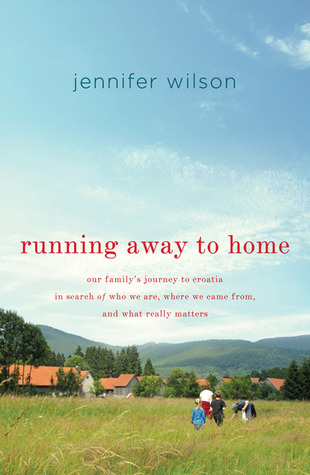
A dinner of door mouse (it tastes like chicken), nights on an ancient futon in a randomly finished attic, a bathroom door that won’t shut, an annoying barking dog next door, drunken neighbors, and a solid language barrier. Such was the glamour that faced Jennifer Wilson and her family when they took a break from their stressful American life to move for four months to the home of Jen’s great-grandparents, Mrkopalj, Croatia. The family went looking for family and adventure and found both. Comfort? Not so much, at least not in the usual sense of the word.

Wilson recognizes physical characteristics that tie her to the people she meets, especially the deep-set eyes so like her own. She eats the food she remembers her beloved Grandma Kate making, such as povitica, a sweet nut bread. She shares local beer with local drinkers, learns to garden the Mrkopalj way, finds old roots and builds new ones.

In this funny and insightful book, Wilson shows us life in Croatia in 2008, and defines what we mean by family. She meets blood relatives, but bonds with an assortment of delightful, maddening, and perplexing neighbors who welcome her, her husband, and their two young children, providing food, advice, and research help. 

Initially, the kids, Sam and Zadie, miss their Iowa home and family, but when it is time to leave Mrkopalj, both mourn the loss of the community that embraced them as part of the tiny village where nothing much happens except at the local bar or the Catholic church. But to kids, that meant freedom to roam, to ride bikes on streets with few cars, to play games non-stop with the neighborhood kids, and to eat popsicles on hot afternoons.  

Wilson takes us on the family’s journey, peeling the onion of Mrkopalj to find the layers of tears below. Depending on their age, residents survived World War I, II, and the Balkan Wars of the 1990s. Many family members died, those who survived faced a life of trauma, the scars of which show in the men’s drinking, a sadness the falls over conversations, and the bad teeth from a lack of dental work and, possibly, bad water. 

After months of searching for her past, Wilson recognizes her own good fortune in being the descendent of those who left. But she sees the strength and goodness of those who stayed behind. Past and present blur as her definition—and ours—of home and family expands.

Pat Prijatel


The Overstory, by Richard Powers


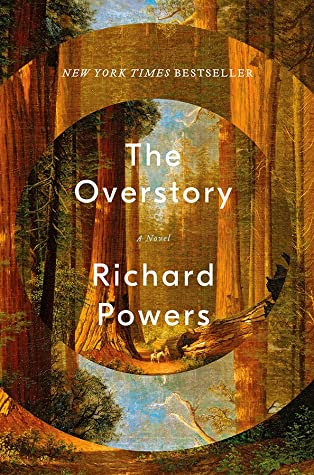
This is a remarkable book, a feat of imagination, research, imagery, and character development. The winner of the 2019 Pulitzer Prize in fiction, it can be a challenge to read—no cruise-control mindless scanning will get you through this one. But once you finish, your world will look different. You’ll sit in your backyard and wonder what the trees are saying to one another. You’ll take a special trip to check out one of the few remaining chestnuts in Iowa. You’ll start noticing trees on your daily walks—how one gingko loses its leaves all at once and another does so gradually. You’ll recognize trees as part of their own communities and as protectors of our own. This book will stay with you, and it is worth every minute you give to it.  

In The New York Times, Barbara Kingsolver wrote about how author Richard Powers, a recipient of a MacArthur Genius Grant, created a work of art with significant scientific merit:

The Overstory accomplishes what few living writers from either camp, art or science, could attempt. Using the tools of story, he pulls readers heart-first into a perspective so much longer-lived and more subtly developed than the human purview that we gain glimpses of a vast, primordial sensibility, while watching our own kind get whittled down to size. 

Powers told the Guardian that he read at least 120 books on trees and this research changed him. He talked about his motivation for the book and its effect on him:

When you look at the statistics of what’s happening to species, to rainforests, to forests of all kinds, it’s so overwhelming that it’s difficult to believe it. It’s utterly daunting. I wanted to tell a story about ordinary people who, for whatever reason, have that realisation about the irreversible destruction that’s happening right now and who get radicalised as a result. The book explores that question of how far is too far when it comes to defending this place, the only place we have to make a home. The act of writing this book has made me more radicalised, for sure.

In a PBS Interview with Jeffrey Brown, Powers explained the scientific backbone of the book:

Whatever I present in the book as scientific fact was, to the best of my ability at the time of publication, verifiable, consensually repeated and agreed upon. 

The book seems so real that, as Kingsolver wrote, readers Google characters to see if they actually exist. In some ways they do. One of the central characters, Patricia Westerford, is a scientist who discovers that trees communicate with one another, creating a community in which members help others in crisis, plan for the future, and guard against common threats. This is based on the ground-breaking work of real-life ecologist Suzanne Simard. In The Overstory, Westerford writes a book, The Secret Life of Trees. In reality, author Peter Wohlleben wrote  The Hidden Life of Trees in 2016, using Simard’s work as a central focus. 

Literary Hub writer Kevin Berger spent a day visiting Powers in his Appalachia home and was there at the poignant moment when the author read Kingsolver’s review for the first time. “I have found my people,” Powers said. And, for every writer who feels compelled to crank out words for the sake of words, Powers emphasized the importance of the contemplation he learned living near the forest, a truth for most of what we do in life:  

When I lived in cities, I wrote out of a tremendous work ethic. I felt if I were to be a serious writer, I needed to produce 1,000 words a day. When I didn’t, I was tremendously anxious. But since coming down here, and committing myself to communication with the plant world, I’ve been much more comfortable in letting an hour or two or more go by in a reverie state. I don’t feel compelled to have a word count at the end of the day, but rather to prepare myself as a ready receptacle for whatever might happen.

This is a book about trees, but it’s also about us. Trees have natural resilience. Those we destroy today will provide roots and seeds for regrowth, which may take hundreds, even thousands of years. Whether humans will be around to see that resurgence is an open question.

Pat Prijatel