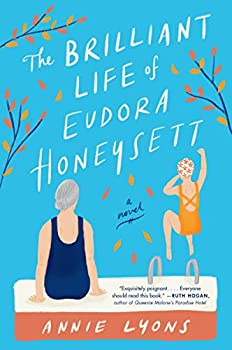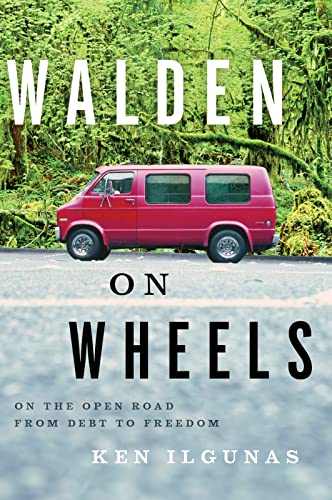
The Brilliant Life of Eudora Honeysett, by Annie Lyons

This book is utterly charming! I don’t know how the author manages to make a crusty, unfriendly old woman and a force-of-nature 10-year-old into such appealing people! They could so easily have come across as unlikeable or bratty… but they don’t.

Eudora is an 85-year-old English woman who is done with life. She has no relations and wants, very badly, to end her life on her own terms. She seeks out a clinic in Switzerland that has a program of assisted suicide to which she can apply. Meanwhile, her next door neighbor has moved out and sold the house to a young family. Ten-year-old Rose enters Eudora’s life and manages not only to be a friend to Eudora, but to think of Eudora as her own best friend.

The book is, as I mentioned at the beginning of this review, simply charming. We see Rose and Eudora developing this most unlikely friendship in spite of Rose’s flamboyance which contradicts all of Eudora’s deeply held beliefs about proper attire and behavior. And in spite of Eudora’s persnickety reprovals of Rose’s ways. There are laugh-out-loud passages and others that just make you smile. 

If you’ve ever owned a cat, you might particularly enjoy Montgomery, Eudora’s cat.  When we first meet Montgomery, he is barely tolerant of Eudora, although she is the one who feeds and cares for him. This passage tells you all you need to know about their relationship at the beginning of the book:

“The cat plants himself with defiance across the top step. ’If you trip me up, there’ll be no one to feed you,’ she tells him. He stares up at her with momentary distaste, but seems to take the point, slinking down the stairs with practiced arrogance.”

But there is so much more to this book. In a series of short flashbacks woven throughout the basic story, we begin to understand why Eudora is the way she is, why she has no family, why some of Rose’s antics rub her decidedly the wrong way, why she’s so determined to end her life before her body deteriorates further. 

Ultimately, this is a book about death and about what makes a good death. And it’s about true friendship that transcends differences of age, of point-of-view, of time and place. It’s a great read!

–Jeanie Smith

Walden on Wheels, by Ken Ilgunas

Walden on Wheels by Ken Ilgunas is many things. It’s a diatribe against student debt, an Alaskan adventure, a how-to on living simply, a reflection on the benefits of physical labor and liberal arts education, a tale of hitchhiking and characters encountered, a biting commentary on the typical American lifestyle and consumerism, and the documentation of a social experiment in which the author becomes an undercover van-dweller in order to obtain a master’s degree at Duke and come out debt-free. Also, it’s a glimpse inside the mind of a college-aged male as he comes of age and develops his voice as a writer, with a nod to Henry David Thoreau. 

Ken Ilgunas was raised in a caring, hard-working family in upstate New York. He did well in school and was both intellectual and athletic, but not particularly involved. He went off to college at the prescribed moment and earned a degree, but deeply regretted the amount of debt he incurred for it, without any palatable job prospects on the horizon. He felt victimized.  

Strapped by how much he owed and wanting to move forward on his own terms, he set out on a series of adventures in wild Alaska. There he lived very simply in exchange for room and board, and he did just about anything that was asked of him – washing dishes, leading tours, cleaning abandoned facilities – as long as he could shrink his debt with every check he sent home.  

Alaska was painfully lonely, with all his downtime spent on reading and one sketchy relationship, giving him space to clarify his thirst for education. His attention returned to college, but he knew he could not stomach the traditional costly living arrangement of grad school. Therefore, as a modern-day Thoreau might have done, he mustered all his spartan Alaskan training and went to the outskirts of campus to live deliberately in a cheap Ford Econoline van that he purchased on Craigslist and outfitted at Walmart. By day he was able to attend classes and use the campus facilities at the library and the gym; by night he cooked, slept, and studied in the van. In the end, he accomplished the goal of obtaining his master’s degree from Duke, debt-free. 

At the outset of his van-dwelling experiment, Ilgunas started a blog. In a series of posts during his two and a half years engaged in Liberal Studies at Duke, he wrote on practical and anecdotal topics such as “Dealing with the cold,” “What’s that smell?”, “So my mom knows about the van…”, “Of Mice and Ken,” and many more. When he was finally ready to tell all, he was able to pull content from these posts and write a coming out (of the van) story for his creative writing class. It made a big hit and he was encouraged to publish it, which he did in Salon magazine. From there he received nudges from publishers to consider writing a book, and he returned to Alaska to do that. He documented the publishing phase too, in posts called “To get a book deal, part 1” and “…part 2”.   

In response to the article, Duke gave him the honor of speaking at his graduation, but they also clarified their parking and transportation rules to officially ban van-dwellers from anywhere on campus henceforth. 

Like the book itself, the voice of Ken Ilgunas is many things. At times he comes off as smug, arrogant, and holier-than-thou. But when he isn’t ranting, he is also self-deprecating and sensitive. A good example of this can be seen in the exchange of e-mails with his friend, Josh, some of which he includes in the book. They contain all the profanity and trash-talk you might expect between two 20-something guys talking privately, but they also shared “politics, religion, worries, dreams, anything and everything… the more personal, the more self-admonishing – the stuff that a person feels most inclined to bottle up.” They were interested in jobs and women, but also with the Holocaust, Armenian genocide, the African American civil rights movement, the gay rights movement, poverty, the environment, and how “corrupt governments are empowered by a complacent citizenry.”  

Inadvertently, while he intended to document and share his adventures in nature and time in the van, what he also does is let the reader observe the nebulous period of growth from boy to man. At times he is downright eloquent. Describing his view of the aurora borealis, he wrote:

The sky lit up with spumes of reds, pinks, purples, and blues that swooped, twisted and curled into each other. There was no sense, no order, no logic to the aurora’s movement. It moved wildly and swiftly, changing into a different shape from one moment to the next. It was a glowing, throbbing, sashaying curtain of color, a Rorschach test that looked like whatever you wanted it to look like: a heavyset grizzly, a woman’s hips, a highway climbing hills. The aurora was a powwow of ancestral spirits – writhing apparitions, conjured from the depths of a village bonfire. It was a desert storm, a million individual particles of light whipping over dunes in patterns that no human mind could comprehend or computer generate. The aurora is alien and unworldly, but it does not frighten or flabberghast; it is a tranquilizer that sprinkles down onto its onlookers an opiate from the heavens. It puts you at ease. 

The fact that he did not set out to write a book with Walden on Wheels makes the whole feel a bit cobbled together. But he developed as a writer in the process, and the book did get national attention. He went on to use these skills to create a writer’s life for himself, satisfying his ongoing needs for freedom, adventure and study. His subsequent books are more focused and organized than the first, but still retain a great combination of experimentation, fact-finding and storytelling. 

In a 2009 blog post entitled “Thoreau’s Disciple,” Ilgunas wrote: “The ascetic who immerses himself in nature or embarks on a holy pilgrimage wishes to thrust himself into the very throes of life. In so doing, he leaves the tidy, formulaic and unwavering character of conventional life to plunge into the very breeding grounds of the authentic experience. By relying on our instincts and wits rather than on our wallets and families, we test ourselves, learn, grow; we can, in this way, reinvent our identities.” 

A gap year right out of high school might have been a less costly way to go and equally clarifying for Ken Ilgunas, but the journey that resulted in Walden on Wheels was an authentic ride worth living and sharing. It was also well worth the read. 

— Julie Feirer

Out of the Easy, by Ruta Sepetys

“My mother’s a prostitute.” Well, there’s an opening line for you! So begins 17-year-old Josie’s story set in 1950 New Orleans. This is a page-turner, a story of the southern gentility that covers over the decadent underbelly of “The Big Easy.” And a young girl’s desire to get out. There’s a murder mystery, dreams and dashed hopes, survival in tough circumstances. But this book is also about love and about family.

Josie’s family isn’t like yours or mine. Her father is unknown to her, but she fantasizes about who he might be. Her mother is well known to her, but is incapable of nurturing her, capable of great cruelty and actually betrays her time after time.  Her family is Willie, the madam of the brothel where her mother works; Cokie, the driver of Willie’s car and a devoted believer in Josie; Charlie, an author and bookstore owner who has suffered an assault that has left him diminished and in need of care; Patrick, Charlie’s son, who runs the bookstore where Josie works.  There are others, too, who surround this smart, worldly-wise teenager and keep watch over her, frequently without her knowledge.

The story centers on Josie’s chance meeting with Charlotte, in New Orleans to visit her cousin. Charlotte is a freshman at Smith College.  She and Josie form an immediate bond that leads to Josie’s determination to go to Smith and get “out of the Easy.” She’s smart enough, sure; she’s got the grades. But her “extra-curriculars” are not exactly what are featured on most college applications. She cleans at the brothel in the mornings and works at the bookstore, where her “family” has created an apartment for her where she has lived alone since she was eleven.

Josie’s relationship with Willie is charming, if not your normal “mother”-daughter one. Take this exchange, for instance. This is the morning routine, after Josie has cleaned up after the previous night. She takes Willie her morning coffee, made just so, along with a report:

“So what do you have,” she asked.

I picked up the pail. “Well, first, this huge thing.”  I pulled an enormous red shoe out of the bucket.

Willie nodded. “From Kansas City.  He paid two bills to dress up in stockings and dance with the girls.”

“And he left a shoe?” I asked.

“No the other one’s under the settee in the parlor.  I keep them up in the attic for guys like him.  Wipe them off and put them back up there.  What else?”

I pulled a twenty dollar bill out of the pail. “In Dora’s toilet tank.”

Willie rolled her eyes.

I produced a silver cigarette lighter from the pail.  “On Sweety’s bedside table.”

“Well done.  It belongs to an Uptown attorney.  What a horse’s ass.  Thinks he’s so smart.  Doesn’t know the difference between piss and perfume.  I’ll have fun returning that to him.  Maybe I’ll drop by his house at dinnertime.”

“And this,” I said.  “I found it in the upstairs hallway.”  I help up a bullet.

Willie put out her hand.

“Did you have one of the bankers here last night?” I asked.

“This isn’t from a banker’s gun,” said Willie.  “It’s for a .38.”

“How do you know?”

Willie reached under her pillow and pulled out a gun.  With a flick of her wrist she opened the cylinder, slid the bullet in the chamber, and snapped the cylinder back in place. “That’s how I know.”

Willie can be gruff, but she’s very well aware of the gem that Josie is and, as we learn, will do almost anything to protect her.

Josie’s growing desires to be admitted to Smith, to somehow find the money to pay the tuition, room and board, and to avoid Cincinnati, her mother’s murderous boyfriend, consume her and drive the plot. And a compelling plot it is. 

I’m not the only member of the book club who couldn’t put this book down. We’ll be reading more of Ruta Sepetys in coming months!

— Jeanie Smith