Pachinko, by Min Jin Lee

Pachinko is largely a game of chance, a combination of a pinball and a slot machine, with balls subtly manipulated behind the scenes by owners of the parlors in which it is played. It’s an onomatopoeia, a word that sounds like what it defines—pachinko. Popular in Japan after the Second World War, pachinko parlors were often run by Korean immigrants who had no other choice and were often called mobsters, no matter how honest they might have been. But, considering the prejudice against them, being considered Korean might have been just as bad as being considered a criminal.

Author Min Jin Lee titled her multigenerational novel Pachinko and, like much of the book, that was a stroke of genius. The book chronicles four generations of a Korean family who become immigrants in Japan and whose lives are like games of chance, one person’s actions sparking a reaction in another, then another, with powerful forces always maintaining some level of control. 
But it’s also a book about human strength, family bonds, love, determination, and hope. It’s the type of book that makes a reader just want to settle down and soak up each page, reveling in the vivid character development, story, and sense of place.
The book begins:

History has failed us, but no matter.

Min Jin Lee is speaking of Koreans, and her story starts at the turn of the twentieth century, with a fisherman and his wife, who are never named, and their son Hoonie, born with a cleft palate and a limp, who comes of age just as Japan annexes Korea. And, for the rest of the book, Hoonie and his daughter, grandsons, and great grandson are pachinko balls, creating their personal history as they have to leave Korea but are never allowed to assimilate into Japan. Shoved into a ghetto, denied passports or the ability to work in any other than low-level jobs, the family nevertheless survives and never loses their spirit.

The thread holding the family, and the story, together in Sunja. Hoonie’s daughter, whose brief affair with a handsome stranger she meets in the market, forces her to marry the sweet, educated, but impoverished minister Isak. Their son, Noa, takes after the biological father he never knew exists, but reveres the loving man he thinks of as father. Yoseb, his uncle, and Kyanghee, his aunt, who have to children of their own, are like second parents. Sunja and Kyanghee become as close as sisters. A second son, Mozasu, completes the little family. 

But always in the wings in Honsu, the stranger, an extremely wealthy gangster, who watches over Sunja and her family, like something between a godfather and a sinister uncle. Manipulating their lives to suit him. 
Through war, death, birth, and the vagaries of fate, sexism and racism, Sunja and Kyanghee build lives for themselves and those they love. Minor characters—some Korean, some Japanese, some American, show that history and culture shape us but only confine us if we allow it

The book took her thirty years to write, and her dedication is apparent in every page. It’s a thick read—479 pages in the paperback version—but it’s a book you really don’t want to end.   

 Pat Prijatel 

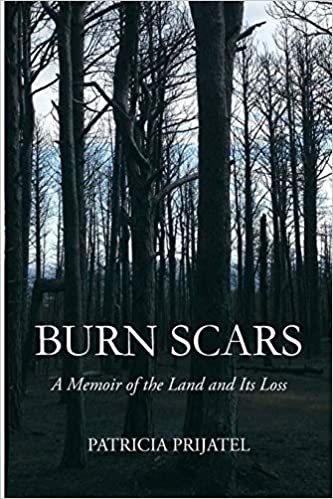
Burn Scars, by Patricia Prijatel

COMMENTS FROM BBB MEMBERS:

As I read this beautifully written memoir, it was like having my own sense of loss affirmed by someone who truly understands. When a landscape we love and are intimate with (whether it’s splendid mountains and valleys or our own backyard), is destroyed by the freakishness of our changing climate, it hurts. It changes us. We stop trusting nature. We feel stress. Maybe we get sick. We need to recover. Patricia Prijatel’s beautifully written account of the burn scars on “her” mountain and on herself is a must read if you care about climate change. It’s well researched and informative, fast paced and vivid. And perhaps surprisingly, in places it’s laugh-out-loud funny.
Sharelle Moranville

This is a beautiful book. The author has infused the opening chapters with descriptions of this land and its people she so loves. But there is a clear sense of suspenseful foreboding for a catastrophe that you know is coming. Her descriptions of the fire and the response of the human beings who are affected by it gain weight the farther we get from the event itself. Far from going back to normal, she chronicles the work of the people to prevent land erosion, how difficult and sometimes impossible it is, and the emotional toll it takes. What grows in the wake of the fire is not a regeneration of what was there before but in some cases harmful plant life that will change the landscape forever. We watch human emotions as they deny, accept, grieve and try to move on. What we learn in the process of reading this book is how precious our earth is and, in taking it for granted, how much we have endangered it.
Jeanie Smith

“Burn Scars” tells the true personal story of a Colorado family’s love for the land and the mountains. They enjoyed a wonderful life near the East Spanish Peak. Then fire erupted. They fled for their lives. Courageous firefighters saved most of the homes but the trauma lasts to this day. Prijatel talks about the personal grief. She tells the impact of fire, wind and flood on the plants and animals. She describes the increasing danger. Each year spawns higher temperatures and dryer forests. Each year sees more and bigger fires. Her well researched story flows easily. Read this book.
Ray Gaebler

The author did an extraordinary job of giving us a personal account of climate grief and educating us. Very readable, relatable and touching.
Karen Peters

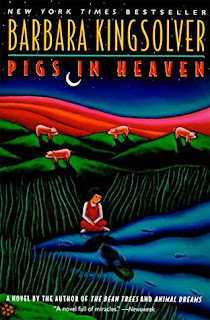
Pigs in Heaven, by Barbara Kingsolver

Pigs in Heaven (1994)is a sequel to Kingsolver’s debut 1988 novel The Bean Trees—in which Taylor, a young woman whose driving ambition is to graduate high school without getting pregnant, finds herself traveling alone cross-country in a car with serious needs. She falls into sudden, unexpected, and unwitting possession of a Cherokee toddler who has been badly abused. Taylor names the toddler Turtle and sets about forming a chosen family to raise Turtle and help her heal from the abuse she suffered. This involves getting “legal” adoption papers with the collusion of a young central American couple who are in the U.S. illegally. Readers can’t help but love adorable Turtle and spunky Taylor and the whole supporting cast. And the novel ends happily with Turtle having been saved by a bunch of white people (plus Esperanza and Estevan). 

But. And there needs to be a but.

What happens in The Bean Trees is good, but perhaps needs a second, more nuanced look. Is it in Turtle’s best interest to separate her from her Cherokee roots? Could Turtle endure the second trauma of being taken from the white mother with whom she has bonded?  Pigs in Heaven is a moving and beautifully written “second thought” about The Bean Trees. 

Young, smart attorney Annawake Fourkiller decides early on that a tribal injustice has been done, and she resolves to undo it –which naturally strikes terror in Taylor’s heart. So she goes on the run with Turtle, living on the edge, meeting fascinating characters like Barbie and the goose man and Jax. Taylor’s mother, Alice, with largely unacknowledged—up to this point—Cherokee roots, gets drawn into a quest to find her own happiness and broker a peace for Taylor and Turtle. 

Kingsolver shows the differences between the expansive tribal family structure and the constricted nuclear white family structure brilliantly. And through all the characters, but especially through the character of Alice, who has a foot in both worlds, the reader is given a more thoughtful look at what might be best for Turtle. What might be best for everybody.

I quote the novel’s ending because it is such a perfect example of Kingsolver’s inimitable style. Cash, who is conveniently both Alice’s soul mate and Turtle’s grandpa—andnow Turtle’s legal guardian—as a token of his deep and true love of Alice, leans the TV against a stump and shoots it.

“The woods go unnaturally still. All the birds take note of the round black bullet wound in the TV screen, a little right of center but still fatal. Alice’s heart performs its duties strangely inside her chest, and she understands that her life sentence of household silence has been commuted. The family of women is about to open its doors to men. Men, children, cowboys, and Indians. It’s all over now but the shouting.”

A truly righteous ending of sweet Turtle’s story.

— Sharelle Moranville