Daughter of Fortune, by Isabel Allende

Isabel Allende is known for creating strong, smart, passionate, and occasionally eccentric female characters. In Daughter of Fortune, this includes Eliza and her adopted mother Rose, plus several bit players that make this story like none other of the California Gold Rush of 1849. And the men are no slouches either.

Baby Eliza shows up on in a soap crate at a wealthy family’s home in Valparaiso, Chili—with or without a mink blanket, depending on who’s telling the story—and Rose, who lives alone with her stodgy brother Jeremy, takes her in and raises her as her daughter. For 15 years Eliza is a model child, dressing like a beautiful and delicate doll and following Rose’s guidance on how to become a proper young lady. Womanhood, though, takes her for a wild ride, and she has a torrid affair with one of her Uncle Jeremy’s lowly employees, the serious and romantic Joaquin. She gets pregnant, but Joaquin has already left to find his fortune in California. Eliza, of course, follows him as a ship’s stowaway and spends the next four years impersonating either a Chilean boy or a Chinese boy searching the High Sierras for her lover.

Rose, a spinster at the age of 25, surreptitiously pens lusty stories that eventually also make their way to California to help miners get through the misery that greets them in the gold fields. As it turns out, Rose has her own secrets, mainly a love affair with one of the proteges of the Marquis de Sade, which gives her plenty of material for her books. Rose secretly wishes Eliza luck with her love affair with Joaquin because she herself was banished from England to Chili to save her reputation, and she’s quietly resentful.

Meanwhile Pauline de Santa Cruz, daughter of a wealthy landowner and wife of an entrepreneur, decides to buy a steamship, fit it with dried ice, and use it to transport fresh fruits and vegetables to the gold fields. She makes a fortune.

We’re never clear about the fate of Joaquin—did he die in California early on, or did he become an outlaw? Jacob Todd, who we first meet in Chili when he pretends to be a missionary, ends up in California, changes his name and calls himself a journalist. He earns his living making up stories about Joaquin, so nobody actually knows what’s what. Even, possibly, Jacob.

Eliza’s friend Tao Chi’en is a Chinese doctor who saves her life aboard the ship and also earns the respect of the California community because of his medical wisdom. He helps Eliza maintain her secrecy and hides his own love for her, which, we’re sure, will eventually be requited.

Rose’s other brother, the dashing sea captain John, adds mystery to the plot. Plus there’s the prostitutes who have learned to stay safe in a dangerous occupation and even more dangerous country and the Singsong girls who Tao Chi’en tries to save, earning a reputation as a reprobate because others think he’s using them in one awful way or another—and are fine with it.

The book is a primer on Chinese and Chilean culture and the horrors of the goldrush. We learn much about human nature while reading this book, in which nobody is entirely who we think they are. Except, possibly, boring Jeremy.

— Pat Prijatel
My Antonia, by Willa Cather

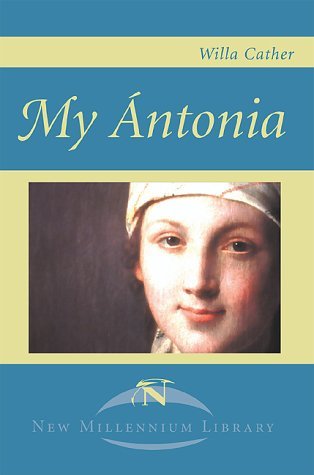
We had one of our most engaged discussions ever while reading Willa Cather’s classic,  My Antonia. In the book’s epigraph, Cather quotes Virgil: “Optima dies…prima fugit,” which translates to “The best days are the first to flee.” The quote has two meanings. First, the book is a romantic look back at childhood and the happiness of the past. Second, the Virgil poem itself is about appreciating and living off the land.The book was first published 100 years ago and new editions continue to be marketed. More than 30 different versions, all with different covers, are available on Goodreads. Most BBB members had a different cover, some showing just the land, others showing Antonia, others combining the two, others using only type and graphics.

Some topics of our chats:

How and why did Cather become such a successful writer at a time when other women were writing under pseudonyms? One reason: She found a home at McClure’s magazine, one of the most active muckraking publications, which gave her credibility as well as a platform.

Did Cather choose to write the book from the point of view of Jim because having a man tell the story might have been more acceptable to male editors? Perhaps, but maybe she did it simply because she felt that was the best was to tell the story.

Jim clearly loved Antonia, but their lives were defined too differently for the two to be together in that world at that time. To be a success, Jim had to leave the land and get more education, which pushed him farther away. To Antonia, however, success meant staying on the land.

Some of the “hired girls” also found success away from Nebraska, where they could redefine themselves and live on their wits and talents without the social restrictions of the city-country divide of class and status.

If Antonia’s father had decided to stay in the city after leaving his native Bohemia—settling in New York instead of Nebraska, for example—would he have had a fuller and longer life? Antonia’s mother, however, knew she could not fit in and moved the family far enough that her past could not follow them. Her husband paid the ultimate price and her kids had a life that was far more difficult than it needed to be.

While Antonia’s life was hard and often harsh, she was one of the happiest characters in the book. She knew who she was and where she fit in, and she embraced her own truths.

Cather’s descriptions of people and the land are so rich that I reread several passages just for the pleasure of the words. This book has one of my favorite lines, which I remember every time we spend the day traveling through Nebraska on our way to Colorado. When Jim first encounters Nebraska as a child, he observes, “The only thing very noticeable about Nebraska was that it was, still, all day long, Nebraska.” Nevertheless, he clearly loved that land, as did Cather.

—Pat Prijatel

TATTOOS ON THE HEART, by Gregory Boyle

In this uplifting and intimate memoir, Jesuit priest Gregory Boyle recounts his three decades of working with “homies” in the barrios of East Los Angeles, an area with an extreme concentration of murderous activity, including over 1,000 gangs with almost 90,000 members. I was by turns mesmerized, horrified, and enthralled as I read.

In each chapter, we benefit from Boyle’s hard-earned wisdom, inspired by his faith, serving alongside the gang members and loving them as Jesus intends us to love others (our neighbors), amply demonstrating the impact that unconditional love and compassion can have on lives. Father Greg, or G-Dog as he is called by the homies, saw the need for a rehabilitation center and started Homeboy Industries in 1986 to provide jobs, tattoo removal, job training and encouragement for members of rival enemy gangs. Their motto, printed on tee shirts is “Nothing stops a bullet like a job.”

Homeboy Industries has grown to a $8.5 million headquarters, housing Homeboy Bakery, a beautiful Homegirl Café, a catering service, various craft industries, and a Homeboy Diner.  It currently employs about 300 former gang members, daily serving about 1,000 customers, and monthly provides 500 treatments for tattoo removal.

The book distills his experience working in the ghetto into a breathtaking series of stories which capture and convey the lessons he learned from kids who have struggled through challenging times and tried to turn around their lives. In each Chapter the reader benefits from Boyle’s wonderful, hard-earned wisdom. With an ear for dialogue, he deftly captures the expressive flavor and colorful language of the Spanglish patois spoken there.  That alone makes Tattoos of the Heart remarkable literature.

The individual stories he tells are woven into parables that will break your heart, as many are about young gang members who start to get on track, only to be randomly shot and killed. It’s difficult to keep a dry eye. Manny was a boy covered with tattoos caught in the crossfire of gang warfare and died on the emergency room operating table. He had enrolled in community college, but was cut down before he ever attended a class.  A nurse who was evidently disgusted by his tattoos, told another “Who would want this monster’s heart?” The other nurse reacted angrily, “How dare you call this kid a monster. He belonged to somebody.  Shame on you.”

Then there was Jason, a young crack dealer, the son of two addicts, who, after rejecting several of Boyle’s invitations, finally got a job with Homeboy Industries. He left his anger behind him, eventually had a home and family, and was looking forward to his daughter’s baptism and had bought her a new dress. But then he was gunned down in the streets.

Luis, also a drug dealer, came to Greg after his daughter was born. He was hired to work in the bakery.  He got a car, a home and a whole new life. One evening, while loading his car, he was shot and killed by some gang members who ventured into his neighborhood barrio.

There are other stories like those of Manny, Luis, and Jason, kids who Greg befriended, turned their lives around, looked to the future with hope, only to end up one more victim of the violence of the LA streets.

But then there are other stories of some who turned their lives around. Bandit came to see Greg after being locked up for selling crack. Boyle got him a job in a warehouse, and Bandit got married and had three kids.  He told Greg he was proud of himself, showing people were wrong who called me a “Bueno para nada” (Good for nothing).

Boyle sees beyond these experiences and reminds us that we are all deserving of God’s love. These young people are not monsters, but scared kids who want a purpose in life. He challenges the reader to “stand in awe at what the poor have to carry rather than stand in judgment at how they carry it.” This is a holy book about the power and impact of unconditional love and compassion.

Considering that he has buried more than 150 young people from gang-related violence, many of which he has known since childhood, and called them by the names their mothers used, the joyful tenor of the book remains an astounding literary and spiritual feat. Tattoos on the Heart, which reminds us that no life is less valuable than another, is destined to become a classic of contemporary spirituality. But, be careful — reading it may change your thinking, and your ministry!

—Ken Johnson

P.S. The book left a tattoo on my heart too.