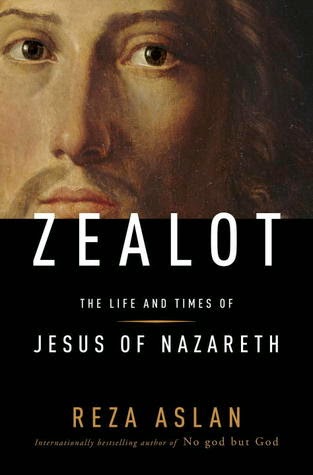
The Year We Left Home, by Jean Thompson

Reading Jean Thompson’s novel is much like paging through a family photo album that says “The Year We Left Home” on the cover. Inside, each photo is neatly labeled:

Ryan, January 1973, Iowa
Ryan, April 1973, Iowa
Chip, July 1976, Seattle
Each photograph focuses on one character, but the whole Peerson clan comes and goes in the background of the photos. We get to a look at everybody multiple times over thirty years. We see them at weddings, funerals, family vacations, conventions, trips to visit the sick and dying, farm auctions, business dinners, Al-Anon meetings, moving day.

At the beginning, Ryan is eager to leave home. He doesn’t want to be Norwegian; he doesn’t want to be a tall, bony Peerson. Yet when Norm and Martha, two tall bony Norwegians like himself, only old, claim the dance floor at the wedding reception, Ryan has an intimation of what he is leaving.  As he watches the elderly couple dance, “It was like the perfect heart of the snow globe, and Ryan guessed rightly that he would remember the moment forever.”

At the end of the story, Matthew and Jimmy, of the next generation, are getting ready to leave home. And Torrie – brilliant, beautiful, ambitious, creative Torrie – has finally, thirty years later, managed to leave home.

The most compelling “leaving home” photos are of Torrie and Audrey. In the early family photos, Torrie is just a leggy kid in the background of other people’s pictures. But then we come to the photo of her (Torrie, November 1979, Iowa).  She’s in the foreground with Martha’s funeral happening in the background. Torrie has acquired big, big dreams. She is going the fastest on her way out of this place. She literally guns her car to get away from the headlights of her dad’s car behind her.

And on the next page of the photo album is a picture of her mother (Audrey, June 1989, Iowa). In this photo, Audrey is trying to take care of an adult Torrie.  “Her beautiful, willful daughter had been stolen away and replaced by this changeling creature, a furious and oversize baby who had to be taught all over again how to eat with a knife and fork, toilet herself, tie her shoelaces.” Some days Torrie will not put on clothes and turns on all the stove burners. Torrie looks through the family photo albums and puzzles because pictures of her stop appearing. She demands her mother get her a camera. Soon Torrie begins to wander around the declining small town photographing things and people. We’re told that Torrie’s photos looked less like Torrie looking at the world, and more like the world looking back at Torrie. Audrey, for all the years of grotesque motherhood forced on her when the nest was supposed to empty, feels abandoned.

The great strength of this novel is the way it reveals characters. We see them in selfies (if selfies had been invented then), we see them in formal poses the way they want to be seen, we see them caught off guard, we see them through the eyes of other characters.  We see them in their own photography. We know them well at the end and recognize them as ourselves.

Thompson explores many of themes in this novel: maturation, alienation, memory, change, family, tradition love, betrayal, marriage, parenthood, heritage, creativity, and home above all.

Leaving home turns out to be a life long endeavor. Thompson’s characters leave home over and over. And every time they return home, it looks different. As do they.

As do we.

— Sharelle Moranville

Author Kent Haruf

The other morning over coffee and The New York Times, my husband said, “Did you read Kent Haruf died?”  I hadn’t, but I wasn’t surprised.  I understood his most recent novel, Benediction, was given that title for a reason.

He is one of the few prolific writers of whom I can say that I’ve read all his books.  And I’m sorry there will be no more. But I’d love to read at least one again (Plainsong would be my preference) and discuss it with the BB&Bers.  (Also, it would address Ken’s lament that we’ve been reading a disproportionate number of women authors lately. ) 🙂

Plainsong was a finalist for the 1999 National Book Award.  In it, as in all his novels, the style is unadorned; he lets his characters show themselves on the page by what they do and say; we have to get to the bottom of things on our own by observing their behaviors and thinking about them. He is very much a writer of place: of small town and rural Colorado. The characters are exactly life sized. They are ordinary people:  elderly bachelor brothers on a cattle ranch; a pregnant teenager; a lonely and well-intentioned high school teacher; a single-parent dad; two little boys whose mother suffers from depression.  It’s in their response to each other that Haruf shows us grace in the most unlikely places.

Even if it doesn’t make it onto our official reading list, I highly recommend it to you fiction lovers. And if you read it, I’d like to hear your impressions.

Sharelle Moranville

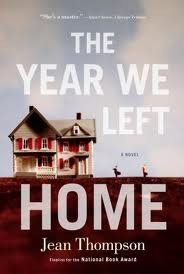
Zealot, by Reza Aslan

For the past few weeks, the Books, Brew, and Banter crowd has been reading and discussing Zealot:  The Life and Times of Jesus of Nazareth (Random House, July, 2013), by Reza Aslan (a #1New York Times bestseller, named one of the best books of the year by Booklist and Publishers Weekly). Of the nine BB&Bers at the wrap-up discussion of Zealot, there were nine thumbs-up.

Aslan describes himself as “a kid raised in a motley family of lukewarm Muslims and exuberant atheists.” At an evangelical youth camp in northern California when he was a teen, Aslan accepted Jesus Christ as his savior and invested in the literal God-inspired truth of the greatest story ever told.  He went on to evangelize others, including his mother who converted to Christianity.  But years later, as a student of religious studies, Aslan was faced with what he saw as a fact: much of the Bible could not possibly be literally true.

In his Author Note at the end of the book, he writes, “Ironically, the more I learned about the life of the historical Jesus, the turbulent world in which he lived, and the brutality of the Roman occupation that he defied, the more I was drawn to him.  Indeed, the Jewish peasant and revolutionary who challenged the rule of the most powerful empire the world had ever known and lost became so much more real to me than the detached, unearthly being I had been introduced to in church. Today, I can confidently say that two decades of rigorous academic research into the origins of Christianity has made me a more genuinely committed disciple of Jesus of Nazareth than I ever was of Jesus Christ.  My hope with this book is to spread the good news of the Jesus of history with the same fervor that I once applied to spreading the story of the Christ.”

Because Aslan is a terrific writer and a diligent scholar, ordinary readers (not people schooled deeply in history or theology) can finish the book in a kind of “Aha!” place.  Jesus as a particular person, living in a particular time and place, comes alive.  And Aslan has made his case that “Jesus the man is every bit as compelling, charismatic, and praiseworthy as Jesus the Christ.  He is, in short, someone worth believing in.”

What may be hard for some readers is learning about all the messiahs that were wandering around that part of the world in those days, and the fractiousness between Jesus’s brother James the Just and Paul of Tarsus. And the committee decision that led to the Nicene Creed in the 4th Century. One element of the creed, the mystery of the Holy Trinity, was a committee effort to please everybody. As he grew older, Aslan found the complexity of the Trinity a stumbling block, and it became important factor in his decision to return to the Muslim faith of his roots.

Zealot is a page-turner that gives a vivid sense of the historical Jesus and a crisp, succinct explanation of what happened in the church’s development between the crucifixion of Jesus and the Council of Nicea.

—Sharelle Moranville.