The Unlikely Pilgrimage of Harold Fry, by Rachel Joyce

The characters and events in The Unlikely Pilgrimage of Harold Fry are indeed unlikely: Harold makes a spontaneous decision to walk the length of England in yachting shoes to keep his old friend Queenie alive. He gradually abandons structure and convention as the journey progresses—finally paying no attention to night or day or weather or food or where he sleeps. He is utterly shocked at the grotesque deathbed disfigurement that has come from Queenie’s waiting for him. None of these things seem quite realistic or likely, yet the overall story comes to feels universally true and important.

At the beginning, we meet Harold and Maureen: “Harold Fry sat at the breakfast table, freshly shaved, in a clean shirt and tie, with a slice of toast that he wasn’t eating. He gazed beyond the kitchen window at the clipped lawn, which was spiked in the middle by Maureen’s telescopic washing line, and trapped on all three sides by the neighbor’s stockade fencing.” Maureen is cleaning, which she does a lot. She likes her toast cold and crisp. And she is dismissive of everything Harold says and does.

Immediately, Queenie’s letter arrives with the news that she is dying, and before long Harold is off on his unlikely pilgrimage to hand carry his inchoate written response to her news, believing that the long journey will delay her death.

At first, Harold and Maureen feel pathetic in their dysfunction—like characters only the author could love. But as they open up to the reader (but not to each other), they begin to feel like survivors who may deserve our understanding, instead of victims who need our pity. As the revelations land, we learn of parental abandonment and indifference. Of a brilliant, but troubled, addicted son who hangs himself.

A universal story begins to unfold of childhood tenderness and trauma, of young adulthood with its peaks and perils. If we’re lucky, true love strikes and makes us dance crazy. But even then, our past nags at our present. Shortcomings show themselves. Mistakes are made, hearts are broken, memories are wrenched into false truths. We blame, we feel guilty. We ache. We mourn. We deny.

Harold’s pilgrimage on a narrative level is about keeping Queenie in this world as long as possible, but his real pilgrimage is to fall in love with Maureen again, and have her fall in love with him again. And for them to share good, true memories of their son who, like everyone, ultimately made his own choices.

At the end, when Harold and Maureen are leaving the nuns after Queenie’s funeral, they find themselves laughing about something one of them said at their first meeting. What was said isn’t shared with the reader. It’s just their memory, which enhances the new sense of intimacy between them. “They caught hands again, and walked toward the water’s edge, two small figures against the black waves. Only half way there, one of them must have remembered again and it passed like a fresh current of joy between them. They stood at the water’s edge, not letting go, and rocked with laughter.”

— Sharelle Moranville

Peace Like a River, by Leif Enger

Leif Enger’s Peace Like a River is a delightful and discussable novel. The story of the Land family—
Jeremiah, Davy, Reuben, and Swede—is set in the early 60s in rural Minnesota and the North Dakota badlands.  

The narrator is Reuben as an adult, reflecting back on a childhood marred by severe and unpredictable asthma. Much of the tension of young Reuben’s story is his nervous, sometimes resentful, monitoring of his dad’s miracles—always hoping for the big one: that his dad will cure him. Reuben knows his dad can perform miracles because he has witnessed them—curing an undeserving school superintendent of a skin condition, healing a flaw in Swede’s saddle, rendering the Land’s Airstream rig invisible to the Law. And ultimately, Jeremiah does cure his son’s asthma, by miraculously gifting Rueben with his own lungs—the occasion for this miracle, by the way, compliments of the evil, murderous Jape Waltzer. 

While young Reuben wrestles with his asthma, his little sister Swede—sidekick and foil—is pounding out a kind of parallel saga of Sunny Sundown and the wicked Valdez on a manual typewriter, often while riding a saddle on a sawhorse in an Airstream trailer heading West in search of fugitive Davy. Sunny Sundown’s saga is told in charmingly awful heroic verse. And significantly, Swede can’t kill Valdez—though if ever a fictional villain deserved death it is he. 

The novel explores very serious and weighty matters: life and death, good and evil, crime and punishment—all the while making us laugh at the most unlikely moments. For example, the gruesome hunting scene near the beginning of the story, rendered hysterical by Swede’s unwise enthusiasm to retrieve the downed goose. 

We see the transformative power of love in Roxanna who, when we meet her, is graceless and plain. But when she and Jeremiah marry, she is graceful and beautiful. And as she is transformed by them, so are they transformed by her: Jeremiah to health and the children from motherless to abundantly mothered. 

Enger’s characters, which are both types and utterly singular, push the boundaries of realism. But because they are so original and engaging, and because the pacing of the story is quick and the stakes are high, the reader cheerfully goes along for the ride. The oversize characters are easy to love, easy to despise, and easy to equivocate about. Jeremiah is Good. Almost like Christ. Jape Waltzer is Evil. Almost like Satan. And Davy, Reuben’s outlaw brother, is Morally Ambiguous. Almost like us. 

Enger’s poses a kind of Yin and Yang dualism. We can’t have life without death, or good without evil, or joy without sadness, or doubt without miracles. Perhaps the reason Swede can’t kill Valdez is because Sunny Sundown can’t live without him. Jape Waltzer needs to murder Jeremiah so Reuben can receive the miracle. And we can’t bear the grimness of it all without being able to laugh.

Sharelle Moranville  

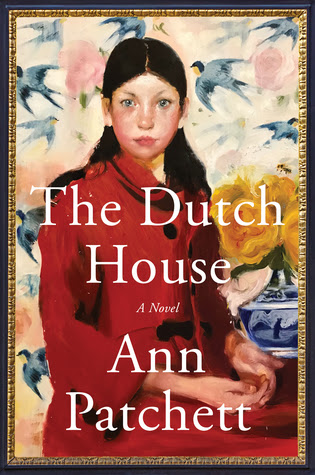
The Dutch House, by Ann Patchett

Patchett is a connoisseur of imperfect characters who are compelling mixes of the saintly, the clueless, the wise and loving, the selfish and manipulative—characters the reader can’t help but care about because they are just so human.

In The Dutch House, Patchett uses the grand VanHoebeek’s mansion that came on the market after World War II as the spine of the multi-generational story. When Cyril Conroy buys the Dutch house (with all the VanHoebeek’s personal possessions and three servants included) as a surprise for his wife Elna, it is a cruel gift to the quiet, would-be nun. 

The changes brought about by moving into the Dutch house eventually send Elna fleeing to Bombay to work with Mother Teresa (who is actually in Calcutta). After she leaves, the Conroy children, Maeve and Danny, are in the capable, loving hands of the housekeeper, the cook, and the nanny, Fiona (aka Fluffy), who is a warm, humorous presence from before the beginning of the story through the end, three generations later.

Danny, as the narrator, shows us life in the Dutch house. After their mother, who has been disappearing for increasingly long spells, seems perhaps not to be coming back ever, he and Maeve wonder if she is dead. Probably, their dad tells them. She probably died in India. Information which is neither comforting nor edifying. 

Then young and attractive Andrea begins to come and go in the Dutch house. The children are left on their own to figure out what this means. Maeve becomes suddenly and seriously ill with diabetes. Despite all this, young Danny still feels secure and loved by the servants and especially his sister, who has taken on a quasi-motherly role.  

When their dad marries Andrea, she brings two little girls, Norma and Bright, into the Dutch House. Maeve and Danny come to love the little girls, but Andrea—in a vein of casual cruelty, gives Maeve’s room to Norma when Maeve goes off to college. And when Cyril dies of a heart attack shortly after Maeve graduates, Andrea calls Maeve and says of Danny: “Come and get him.” Thus Danny and Maeve are summarily banished from the Dutch house and Norma and Bright.  Equally shocking, Maeve and Danny discover Andrea now owns everything: the Dutch house and all of Cyril’s real estate and investments. Danny and Maeve are left with Maeve’s car and a foundation established for the education of Cyril and Andrea’s four children. 

Thus begins Danny and Maeve’s period of watching the Dutch house and plotting. In Maeve’s car, they take up posts, smoking and talking, with Maeve planning ways for Danny to use up the foundation money by the longest, most costly education imaginable. And from this revenge plot, Danny eventually and unwittingly becomes a doctor, when all he wants to do is get a little money together so he can start investing in real estate and follow in his dad’s footsteps. 

Danny’s girlfriend, Celeste, in training to be the best doctor’s wife ever, discovers she has married a landlord instead of a doctor—repeating Elna’s pattern of discovering her husband was not who she thought he was. And Danny ironically repeats family history too by surprising Celeste with a beautifully restored brownstone in Manhattan not at all to her taste.

Over the years, through various bits of information, Danny and Maeve gradually come to understand their mother is still alive, living and doing good works among the homeless in the city. Danny struggles with how to feel about this, but Maeve embraces the woman she still calls Mommy.  

Near the end of the story, Elna convinces her children, as only she could, to go with her to visit the Dutch House.  This causes a tectonic shift among the characters. Now demented, Andrea is enormously comforted by Danny, who she believes is Cyril returned to her. Ever compassionate (except perhaps to her young children) Elna moves back into the Dutch house (unchanged all these years) and works with Norma (who actually did want to become a doctor) as Andrea’s caretakers. Maeve, who feels abandoned by her mother once again, dies of what is surely meant to be taken as a broken heart.  

As the story ends, Danny and Norma become siblings of sorts (“a half-sister from a second marriage,” as Danny cautiously puts it). Elna begins to disappear among the poor again. Danny finally gives up his rage at his mother and replaces it with “familiarity.” Danny and Celeste divorce. Fluffy visits the Dutch House now and then and sleeps in her old room above the garage. And May—Maeve’s namesake—gains fame and fortune as an actress and ultimately buys the Dutch house and brings back parties reminiscent of the VanHoebeek era. And the portrait of Maeve, originally painted to stare down the VanHoebeck’s portraits hanging across the room, looks to all the world like May. There’s a sense of rightness about this ending. Finally, the Dutch house has come into its own as the Conroy house. 

The Dutch House is a rich and conversation-provoking story showing us the human condition in fascinating particulars.

— Sharelle Moranville