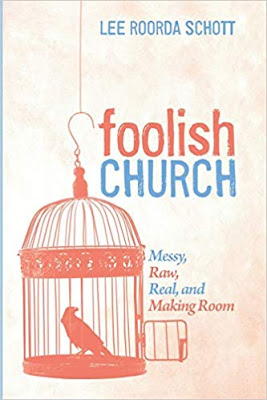
Foolish Church, by Lee Roorda Schott

Pastor Lee visited with the Books, Brews, and Banter group this April. We talked about her inspiring book and how we might apply her wisdom to our own lives.  Below are three individual reviews of her book, which are also posted on Amazon’s page for the book.

This powerful book is somewhat scholarship (footnotes and an extensive bibliography), somewhat how-to (discussion questions at the end of each chapter, plus helpful, practical appendices), and somewhat a memoir of Pastor Lee Roorda Schoot’s leading a church inside a women’s prison. But most of all, it’s a passionate argument to make our churches really real—not just shiny, happy places where the nice people go periodically.  

In a well-paced, anecdotal style, Pastor Lee convinces the reader (at least this reader) that if we open our churches (with wise and necessary boundaries) to ex-offenders, we also open our hearts and minds in a way that benefits each of us and the whole community. FOOLISH CHURCH: MESSY, RAW, REAL, AND MAKING ROOM isn’t just a book about welcoming ex-offenders. It’s a book about welcoming ourselves and the worst things we have ever done. About acknowledging life’s messiness. And making room.

—Sharelle Moranville

“Pastor Lee,” as the inmates at the Iowa Correctional Facility for Women at Mitchellville call her, gets down to the raw and messy sides of being part of a church today. Are we welcoming? Inclusive? Judgmental? Do we accept one another’s scars (and our own), or are we looking for a sanitized community that’s an idealized version of ourselves? In clear, direct and inspirational prose, Schott shows us the way to the church community we could be, using her relationship with women inmates as a model. A book well worth reading for any faith community.

— Pat Prijatel

Foolish Church is a relatively short book that is long on wisdom about how to build more caring communities with room for people the church has often overlooked. Her message is a powerful, yet simple message that applies to all of us.  It is a plea to move beyond an assembly of the upright and proper, to make room for those on the edges of respectability. 

One quote that really resonates is “how do we become churches that build boundaries, but not walls.” Are we welcoming, inclusive, judgmental, or looking for a sanitized community? I believe that those are also questions that should be heeded by our President in making our country one that builds boundaries, not walls.

—Ken Johnson
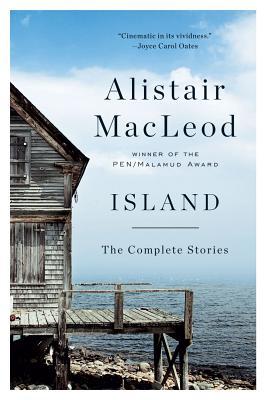
Island: The Complete Stories, by Alistair MacLeod

The words of the narrator in “The Closing Down of Summer”:

“[I]n the introduction to the literature text that my eldest daughter brings home from university it states that ‘the private experience, if articulated with skill, may communicate an appeal that is universal beyond the limitations of time or landscape.’ I have read that over several times and thought about its meaning in relation to myself. . . . I would like somehow to show and tell the nature of my work and perhaps some of my entombed feelings to those that I would love, if they would care to listen.”

And what follows is the narrator’s explanation of leaving university and the reading of literature to embrace the life of a deep shaft miner, traveling the world, abandoning his family at the end of each summer in a caravan of big cars full of large, strong, brave men, and going to places like Haiti, Chile, the Congo. Bolivia, Guatemala, Mexico, Jamaica. Drinking moonshine as they drive non-stop, hard through the night.

MacLeod is brilliant in showing and telling the nature of their dangerous work and the fullness of their hearts in their isolation from the rest of the world. We can feel their physicality and courage. We can know them.

Like the narrator in “The Closing Down of Summer,” MacLeod wants us to understand and care and know about his corner of the world, his people, his roots. So he writes about the people who came to Cape Breton as part of The Clearances (the forced migration of people from the Highlands and western islands of Scotland in the mid-to-late 18th Century). Most of his stories are set on Cape Breton, where the old Gaelic language, music, and myths are still part of life.

MacLeod uses his amazing skills as a describer to make us feel how beautiful and compelling, but inhospitable and dangerous, Cape Breton is. How proud people are to be miners, fishermen, and farmers. How arduous such work is on the body and spirit. What pride the people take in their work.

There are sixteen stories in Island, the first published when MacLeod was thirty-one, the last when he was sixty-three. And the tenor of the stories, as they progress from 1968 to 1999 generally embrace the aging of the human spirit and psyche.

Characters in the earlier stories are more innocent and aspirational (boys like Jesse in “The Golden Gift of Grey” who drifts into the pool hall, and like James in “The Vastness of the Dark” who believes leaving home will be simple).  With the middle stories like “The Closing Down of Summer,” narrators are in their prime, but mindful of the cycle of life. And with the last stories like “Vision,” “Island,” and “Clearances,” there’s disillusion, madness, German tourists, and pit bulls.

Stories are populated by children, young people, men, women, old people–and, of almost equal importance, by cattle, horses, sheep, dogs, and chickens.  The breeding of people and the breeding of animals is serious business in this world.

Most of the stories have a male narrator – thus the collection overall has a masculine perspective. In many ways, the stories are a study of masculinity. But we see women. And they are strong. The fierce mother in “The Boat” and the woman with the coral combs in “In the Fall.” The resolute grandmother in “The Road to Rankin’s Point.” The brave, lonely, ultimately mad woman in “Island.”

The skill of MacLeod’s writing makes Cape Breton and its people real. We know them. And by knowing them, we know ourselves. We know that life is ultimately a story of loss, but that loss can be faced with kinship, love, and courage.

My favorite anecdote about MacLeod is that when a writing student asked him how long a good story should be, MacLeod answered, “Just make your story as long as a piece of string, and it will work out just fine.”

And it does.

—Sharelle Moranville

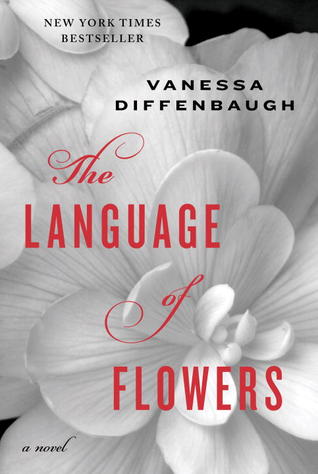
The Language of Flowers, by Vanessa Diffenbaugh

In an author interview at the end of The Language of Flowers, Vanessa Diffenbaugh says of her inspiration for the novel, “I’d been a foster parent for many years, and I felt it was an experience that had not been described well or often…. With Victoria, I wanted to create a character that people could connect with on an emotional level—at her best and at her worst—which I hoped would give readers a deeper understanding of the challenges of growing up in foster care.” As someone who worked for seven years with kids in foster care, some of whom aged out like Victoria, and as someone who was briefly a foster parent, I think Diffenbaugh does a terrific job.
We meet Victoria on her way to her “last chance” placement with Elizabeth. “I pressed my forehead against the window and watched the dusty summer hills roll past. Meredith’s car smelled like cigarette smoke, and there was mold on the strap of the seat belt from something some other child had been allowed to eat. I was nine years old. I sat in the backseat of the car in my nightgown, my cropped hair a tangled mess. It was not the way Meredith had wanted it. She’d purchased a dress for the occasion, a flowing, pale blue shift with embroidery and lace. But I had refused to wear it.”
Diffenbaugh’s language as she tells Victoria’s story is full of this kind of rich sensory detail that puts the reader in the backseat with Victoria when she shows us the mold on the strap of the seat belt. And that one tiny, dirty, carefully observed detail suggests larger truths about the foster care system. For that trip to her “last chance” Victoria is still in her nightgown. Because we all feel vulnerable in our nightgowns, we take Victoria’s vulnerability into our own sensibilities.
Victoria is a very specific girl; she’s not a type, and that’s where the charm and intelligence of the story lies. She is memorable. She speaks the language of flowers. She burns down the vineyard and lies to the judge. Against all odds, she becomes a successful business person with her language of flowers. She lives in weird places. The scene where she wraps her baby in moss to give to Grant is such a wonderful, fresh, memorable scene. As is her almost Homeric battle with Hazel to get nursing routine under control. I will never forget Victoria, just as will never forget Dellarobbia in Flight Behavior. 
Yet Diffenbaugh also achieves her goals of giving readers an understanding, generally, of the hardship of growing up in foster care. Victoria’s anger (which is really a mask for terror), her ravenous hunger (a sign of her emotional emptiness), her inability to learn in a normal school setting are normal behaviors of foster kids. The kids are usually terrified, emotionally drained, and unable to concentrate. Victoria makes these generalities specific in the most compelling way. 
We say goodbye to Victoria when she’s a mother and a small business owner and on the cusp of beginning a new and hopeful life with Grant, Hazel, and Elizabeth. And the journey from hello to goodbye is steered by the language of flowers. Victoria finds that language clear and unambiguous—Hazel means reconciliation; moss means maternal love; purple hyacinth means please forgive me. And where there is ambiguity, Victoria sorts it out, nails it down, and records it on two cards. One for her; one for Grant. The language of flowers, which Elizabeth introduces her to, connects Victoria to Elizabeth, Grant, Hazel, and her customers. And that’s where her hope lies at the end of the story. —Sharelle Moranville